
DAF vs. private foundation: Which fits your charitable goals?
We compare the differences in control, taxes and administration to help guide your philanthropic strategy.
It’s been said that true prosperity can be measured by the roots we plant and the shade they provide for others. Whether your heart is set on preserving coastal environments, helping youth in your community or something else, a wealth advisor can work with you on a plan to help your generosity go further. Two of the most common giving vehicles that may fit into that plan include donor-advised funds and private foundations.
What is a donor-advised fund?
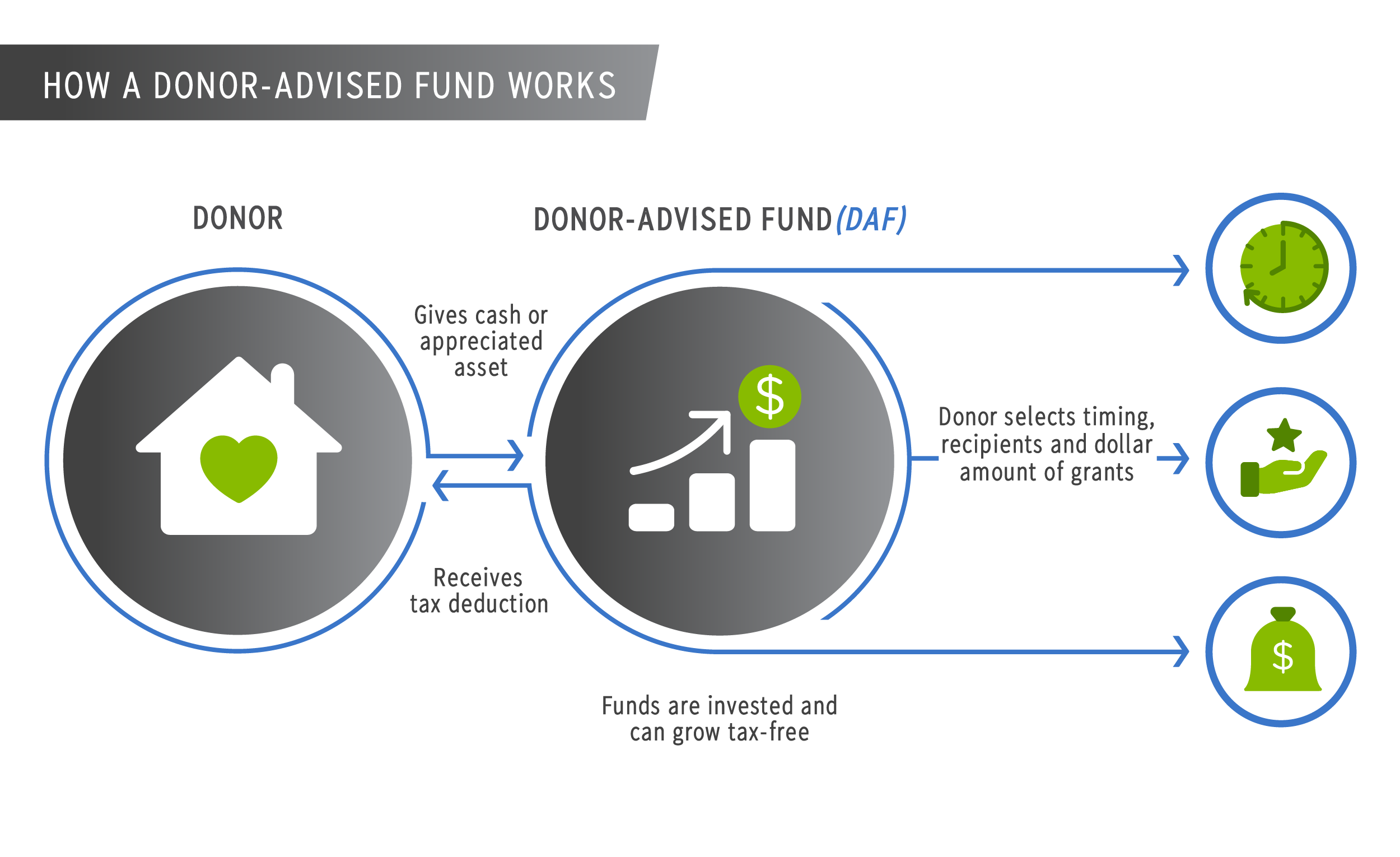
A donor-advised fund (DAF) is an account that allows you to make tax-deductible contributions of cash or securities, grow them tax-free, and then select the qualified charities the money goes to at a later date .
“A donor advised fund is a simple and flexible way to give charitably,” says Steven Sommers, Philanthropic Solutions Area Manager. “In many ways, it democratizes philanthropy. You can open a donor advised fund for a fraction of what it takes to start a private foundation often with no attorney and no formation documents—none of those hurdles.”
What is a private foundation?
A private foundation is an independent organization that does not meet the definition of a public charity. Unlike public charities that receive broad public support, they receive funds from limited sources, most often a single individual, family or corporation. As a result, private foundations are subject to closer regulatory scrutiny and more restrictive operating rules than public charities or donor-advised funds.
| Donor-advised fund | Private foundation | |
|---|---|---|
| Privacy | Grants can be anonymous | Public grants, and tax filings are searchable |
| Setup | Simple with low administrative burden | Complex setup that requires legal staff |
| Control | Advisory role over grants | Full board control over all operations |
| Tax benefit | Higher deduction limits for adjusted gross income | Generally, lower deduction limits |
Use cases for DAFs
Donors are generally eligible for a charitable deduction when they contribute to a DAF under current tax rules, regardless of when grants are distributed. That can support a strategy called “bunching” where a donor accelerates charitable giving into a year in which the donor plans to itemize.
“DAFs let donors bunch several years of gifts into a single tax year to maximize deductions—something they often can’t do with small annual gifts,” Sommers says.
For example, a business owner who sold their company can use a DAF and a bunching strategy to consolidate multiple years of charitable donations into the high-income sale year. This may help increase tax efficiency, including the potential to offset higher income in a given year and, in certain cases, potentially avoid recognizing the embedded capital gain on donated appreciated assets. The owner may receive an immediate charitable deduction, subject to IRS limitations, and can recommend grants over time.
That same donor could name adult children as grant advisors or successor advisors and hold family meetings to determine grants and build financial skills. In that way, it’s similar to a private foundation—but with less complexity.
“DAFs can be effective tools for family involvement and financial education. You can bring children into the process as grant advisors, hold family meetings, and talk about investments, priorities and charitable intent,” he says.
Use cases for private foundations
One of the benefits of foundations? They give families full control over investments, governance, granting processes and operations.
“People choose private foundations when they want more responsibility and more control—over the assets, the investments, the governance and the long term charitable strategy,” Sommers says. A private foundation is more like running a business. You’re responsible for compliance, minimum distributions, tax filings and ensuring investments don’t jeopardize the charitable purpose.
A famous example is the way Warren Buffett has decided to distribute his fortune—by granting billions in Berkshire Hathaway stock to three foundations managed by his adult children. “Unlike a DAF, a private foundation may be able to compensate certain family members for personal services that are reasonable and necessary to carry out the foundation’s exempt purposes. For families building a long term enterprise that can be important.”
Finally, there is the ability to name individuals for scholarships and grants. “If a donor wants to award scholarships directly to individuals or run a grant application process, a private foundation could be the better structure,” Sommers says. “You simply can’t do that through a donor advised fund.”
He describes how clients sometimes choose a foundation. “I once worked with a mother and daughter who wanted to offer scholarships to young women from disadvantaged backgrounds. Their donor advised fund couldn’t do that in the way they envisioned it, so they created a private foundation. It gave them the control to design the scholarship program and select the recipients directly.”
A holistic approach
Whether you want to establish a donor-advised fund or a private foundation, it’s important to make that decision within the context of your overall wealth and estate plan, advisors say.
“Philanthropic planning shouldn’t happen in isolation,” Sommers says. “It ideally aligns with a family’s entire financial picture. This is a holistic exercise, from family and business to personal values.”
Finally, donor-advised funds and private foundations should be considered as part of an estate strategy, not just a lifetime giving strategy. “The goal isn’t just tax efficiency. It’s making sure your wealth reflects your life purpose.”
Pursuing a lasting impact
In the end, charitable giving isn’t just about choosing the right structure. It’s about deciding what you want to grow and who you hope will one day rest in its shade. Whether a donor-advised fund offers the flexibility and simplicity you’re looking for, or a private foundation provides the hands-on stewardship your vision requires, the right vehicle can help turn good intentions into lasting impact.
By working with a wealth advisor, you can align your resources with your values and plant something enduring. With thoughtful planning, your generosity can take root and create opportunity for generations.
Talk to your Regions Wealth Advisor about:
- What you should consider when creating a plan for your philanthropy.
- How to make the most of your giving by leveraging our Philanthropic Solutions team.
Want to get started with wealth planning?
Our wealth management guide can help you identify your top planning priorities.
Interested in talking with an advisor but don’t have one?
Find a wealth advisor in your area.
Related Insights
-
 Article
7 min read
Article
7 min read

-
Article
14 min read

-
Article
12 min read