Funeral planning can be a stressful undertaking for surviving loved ones, which is why many people are now choosing to preplan their own funerals. If you’re thinking of planning ahead for end-of-life events, you might have several questions: What is included in a prepaid funeral? More importantly, how do you pay for a funeral in advance? In this episode of Regions Wealth Podcast, Funeral and Cemetery Trust Division Manager David Falconer joins us to discuss preplanned and prepaid funerals. We’ll touch on the difference between a prepaid funeral trust and a life insurance policy and what steps you should take to ensure you’re making the right decision for both yourself and your loved ones.
Episode Transcript Sarah Fister Gale: Welcome to Regions Wealth Podcast, the podcast that tackles life's challenges with financial experience. I'm your host, Sarah Fister Gale. Planning for end of life events can be a stressful undertaking, especially when you have loved ones to consider, and figuring out how to best plan for and fund funerals can feel particularly daunting. Joining me remotely is David Falconer. He's senior vice president and Funeral and Cemetery Trust Division manager at Regions Bank. David, thanks for joining us today. David Falconer: Absolutely. Glad to be here. Sarah Fister Gale: So in this episode of Regions Wealth Podcast, we're discussing planning for end of life costs. We've taken some frequently asked questions from a bunch of people and developed a character who needs your help. Let's listen.
Jill: “Hi. My name is Jill, and I guess I’m looking for a little guidance regarding end-of-life planning. I’m a single mother and I’m 59 years old. My son Derek, who’s 22, has a disability and he needs a lot of support. A few months ago, he moved into a group home. I’m still heavily involved in his daily life, but I really wanted him to have a taste of independence. Because of his needs, I’ve been www.regions.com/wealthpodcast diligent about estate planning and have made provisions for him to be taken care of aer I’m gone. I’ve appointed my sister Deanna, who’s 14 years younger, to take care of him aer my passing. It’s a huge responsibility that she’s taking on — and I’m super grateful to her for doing so. Recently, I met with my advisor to create a medical directive. I suppose this got me thinking about other end-of-life needs. My sister will have a lot to deal with at my passing, and I don’t want to saddle her with things like funeral planning on top of it. A friend of mine mentioned the idea of pre-paid funerals, but I’m not really sure what that entails, and if it’s really a legitimate thing. ”
Sarah Fister Gale: So David, let's start with explaining prepaid funerals for Jill. What are they, how do they work and how does one start planning for it?
David Falconer:
So, a prepaid funeral is kind of a generic word for really something that has two components to it. It's the pre-planning aspects, and it's the prepayment aspects of your funeral service that will take place someday down the road. So let's talk about both. Pre-planning sounds exactly like what it says. It is the consumer walking into the funeral home, talking to the funeral director or the cemeterian about what they want to take place for their service. The funeral home owner will document all that, and keep it in a file somewhere, and when the time comes, they'll be able to pull it out and say, "Well, these were the pre-planning idea that I've got written down for this particular person. " That's the pre-planning aspect of it. Pre-paying for the funeral is the second part of that, and that actually locks in those pre-planning discussions. If the consumer just pre-plans the funeral, the family can change things. But once it's pre-planned and prepaid, everything's kinda locked in place. Sarah Fister Gale: And if you go with a prepaid funeral, what expenses or elements of the funeral does that cover? David Falconer: So from a financial perspective, what's really covered, and that's a great question and one it’s that the consumer absolutely needs to completely understand when they're talking with the funeral director. I would say basically it's the big ticket items. The ones that come to mind really quickly are the casket, the granite monument or the brass marker at the cemetery. Those are your bigger ticket kind of things, if you will. That's the negotiations that the consumer has with the funeral director or the cemeterian upfront. Here are the services that I want, here's what I want to have happen, here's my marker, here's the casket type that I want, here's the urn, if it's cremated remains. Then there's the people aspect of a preplanned and prepaid for funeral. That's for instance, the police escort that will happen someday when the procession goes from the funeral home to the cemetery. That's the people aspect of things. And those are www.regions.com/wealthpodcast generally not part of that prepaid contract arrangement, because most contracts don't come into effect until years aer they were originally established. So if you think about that, that police officer's being charged an hourly rate. And that hourly rates going to be different, several years in the future. So some items that involve people like a police officer, and the florist, those won't be covered. A lot of times funeral homes and cemeteries will kind of package things up. We're all familiar with a la carte pricing versus a combination type of pricing. And there are advantages to both, and those are consumer decisions as well, but that's how you come up with the price. The consumer needs to understand what is and is not included in the contract. And so there's a price list for that. There's a thing called the FTC rule where the funeral home owner has to provide a general price list, a GPL upon request, or really when they're talking to the consumer about a prearranged funeral service.
Sarah Fister Gale:
Tell us a little bit more about who can benefit from a prepaid funeral arrangement and how might surviving family or friends, in this case, Jill's sister Deanna, specifically benefit?
David Falconer:
The family and the friends benefit two ways. There's a psychological benefit to this and there's certainly a financial benefit to this as well. From a psychological benefit, which again, very important here, is the family knows what the person who's passed away’s wishes are. That information has already been communicated to the funeral home director, to the cemeterian, they know, and the family knows. There's no guesswork there. And with all the other emotions that are going through the passing of a loved one, it's great to have that piece of it out of the way. There's no questions about that. From a financial benefit, the second benefit, by pre-planning and prepaying for your funeral, you're taking out the financial concerns or burdens of the family. One, maybe trying to figure out where they're gonna get the money to be able to provide those services or two, if those funds exist, they might still have to go through the process of figuring out in the unwinding of the estate, where does that money actually come from? If they've been preplanned and prepaid, the family and the friends don't have to worry about that.
Sarah Fister Gale:
And can you do this if you have less traditional plans for your funeral, say being cremated and having your ashes scattered somewhere? Are there prepaid arrangements in those cases?
David Falconer:
Yes, there are. And that actually is a really excellent point. The trend in the United States is towards cremation. Those are all gonna be very unique situations for each individual, but one of the negative trends of cremation is the family member kind of thinks well, I'll be cremated and there's nothing else that needs to be done. And that couldn't be any further from the www.regions.com/wealthpodcast truth. You can still have a funeral service without a casket. And in fact, from a psychological standpoint, it's very important to have some type of meaningful event to kind of signify the end of a person's life to celebrate their life. And unfortunately, this trend in cremation has got a lot of people thinking, I'll just be cremated, and that's the end of it. That's just not in my opinion a great way for the family to have some closure.
Sarah Fister Gale:
Let’s pause here and listen to a bit more of Jill’s story.
Jill:
“When I started looking up pre-paid funerals, I noticed a few different funding options… insurance… trusts. I’m not really sure what any of these mean, or which option would be the right one for me. I’ve tried doing my research, but it’s really difficult to figure out the pros and cons of each option, how they work, and which I should choose. I would hate to make the wrong decision and not only lose money, but also put Deanna in a frustrating situation.
” Sarah Fister Gale:
So David, Jill mentioned a few different funding options here. Can you walk us through some of those?
David Falconer:
Yeah, absolutely. So insurance funding versus trust funding. When the consumer passes funds onto the funeral home or the cemetery owner, by law, the funeral home owner or the cemeterian has to segregate those assets from their business assets. In other words, it's almost like an escrow account. They can segregate them in a couple of different ways. The two primary ways they do that is they can take those funds and go out and buy a life insurance policy on the life of the consumer where the life insurance policy beneficiary is the funeral home. So when the consumer passes away, the life insurance company will send those funds directly to the funeral home owner. The funeral home owner will then use those funds to satisfy the contract, to provide the services that have been agreed upon.
The second option for the funeral home owner and the cemeterian are to take those assets and put them into a trust account, a funeral trust account. And that's what we do here for a lot of our clients. And what we do when those assets come into the trust account is they become part of all of the trust fund monies that that funeral home or that cemetery has. And we follow the state laws regarding how to invest those funds and you invest those prudently for growth. That pre-need contract becomes what's called at need, which basically means the consumer has passed away. So now it's time to provide those services. So when that happens, the funeral home, the cemeterian will inform us, the trustee, the consumer's passed away, here's a copy of the contract, here's the services we're gonna provide, and then we come up with the value that is now in the trust account. And we pass that value back over to the funeral home or the cemeterian to do the same thing, use those funds to satisfy the services that have been agreed upon. So those assets are separate and apart from the funeral home owner and the cemeterian. So worst case scenario, the funeral home goes out of business. Those assets aren't subject to the creditors of the funeral home.
Sarah Fister Gale:
So if you are putting money in a trust to cover these costs, what if it makes so much money, it covers more than the cost of the funeral?
David Falconer:
Right. It's an excellent question. Prices are going to go up. So the goal of the investments in the trust or in the insurance policy is not to make somebody super rich, but to really keep up with the cost of inflation. Now, the funeral home owner is taking on the risk in what's called a guaranteed contract. They're promising they're gonna provide those services no matter what the end value is. So the funeral home owner has the potential for a little additional money if there's a little leftover, but they also are responsible to make up the difference if it's not enough based on the investments as well.
Sarah Fister Gale:
And what is a non-guaranteed contract?
David Falconer:
A non-guaranteed contract is best probably described almost as a down payment, if you will, on the prepaid funeral. X dollars are provided that the funeral home owner agrees in the contract that they're gonna provide these particular services, but they won't guarantee the final price. So let's take, for example, you know, a casket might be $3,500 today in a non-guaranteed arrangement. Eight years from now that same casket might be $4,300. In that situation, the funeral home owner will go back to the family and say, there's a difference here that needs to be made up by the family. In a guaranteed contract situation, the casket is the casket. That's what's gonna be provided no matter what the cost of that casket is eight years down the road. Sarah Fister Gale: So based on your experience, how do you know which option is right for you? David Falconer: It starts with the question of, what is the consumer's end goal? And there's really two choices here, and it's a personal decision of the consumer. One approach that the consumer might have is, I'd like to have everything completely arranged and completely taken care of from a financial perspective as well. In a case like that, a guaranteed contract would be something to talk more with the funeral home owner and the cemeterian about. If on the other hand the consumer's like, I wanna make the pre-planning decisions, and I wanna be able to, to provide some guidance around the financial aspects of what's gonna happen at that end of life event, then perhaps a non-guaranteed contract would provide a little more flexibility. And again, as those are gonna be personal decisions of the consumer and the family on which way to go. And that the funeral home owner and cemeterian can kind of walk them through the benefits of each, and they can make that decision.
Sarah Fister Gale:
So Jill wants to do right by her sister, as well as her son. What kinds of conversations should Jill be having, or maybe even revisiting with Deanna?
David Falconer:
Great question about conversations. And we're talking again about the consumer working through their issues of how they want the funeral to work. Really, that's the psychological aspect of it. Again, we spend a lot of time talking about what the consumer wants, but if you think about it, who is the funeral really for? The funeral's for the family. So I'd really encourage her to have a conversation with her family ahead of time about what their thoughts are about what a funeral service would look like.
Sarah Fister Gale:
That’s a great point - I imagine that it’s easy to lose sight of that when pre-planning your funeral. Let’s listen to the final portion of Jill's story.
Jill:
“Beyond just funding my funeral, I’d also like to remove the burden of planning it, too. What are my options there? I’m quite healthy and can’t imagine going anywhere for at least another 15 years. Are there any risks associated with making specific funeral plans this early? I want to make sure I know exactly what I’m doing here: the risks, the factors I need to consider, how to choose the right provider, and the questions I should be asking. ” Sarah Fister Gale: So David, we’ve talked a lot about the financial side of this, but Jill raises a good question: when is the right time to actually engage in pre-planning?
David Falconer:
The best time to make these big decisions is when you really don't have to make them, when you're not under pressure to make them quickly. And so having these discussions with your family and ultimately putting these plans in place ahead of time makes a lot of sense. Being across the table from a funeral director when you don't need that service next week, puts you in a lot better negotiation position. It also puts you in a much better position to have a clear head to work through those planning decisions. So the question is, when should I get started? The best time to make a decision like this is kinda when you don't need it, which is now. That's the best time to get started. It's an opportunity for you to potentially talk to multiple funeral home owners to find the best overall situation from a financial perspective and a service perspective, and maybe, a cultural fit even. So starting now absolutely makes the most sense. It gives you the best opportunity to make a good financial decision.
Sarah Fister Gale:
So Jill is still relatively young. What are some of the pros and cons of planning 10 or 15 years, or even more in advance?
David Falconer:
The pros again are you've communicated those decisions hopefully to your family, and you've got those plans in place. You could have paid, which takes that financial burden off the family. So those are the pros. Potential disadvantages to that, you might change your mind. You're entitled to change your mind. That contract is not irrevocable until you pass away, right? So, you are more than welcome to change your plan. You can go back to the funeral home and you say, "I don't want a green urn. I now want a gold urn. " You can go into the funeral home and have those conversations with them. Now, there could be some price differentials when you do that. And the funeral home or cemeterian will walk you through that.
Sarah Fister Gale:
So this brings up a great point: I would’ve assumed that once the contract is in place, it’s set in stone. Is that a common misconception?
David Falconer:
One of the things that people think is once I've made this contract it's irrevocable. I can't change it. You still can. You actually can even go all the way to the end of that and cancel that whole thing if you wanted to. Each state has laws about how cancellation policy works. Typically, the funeral home owner or cemeterian is gonna keep a little piece of something which makes sense, but it's a very small amount. And then that allows you to go off and do something somewhere else if you wanted to. So you can make changes. The other challenge - and we see this a lot, is what if you move? What if that family member lives in State A and that's where the arrangement has been made, and then they moved to State B? What happens in a case like that? Funeral homes will speak to each other. The servicing funeral home, the one that does a service could be different than the funeral home that you originally had the contract with. You just need to make sure that the funeral home knows that you have a prepaid arrangement, and your family needs to know that as well. We've seen instances where the family didn't even know that the consumer had a prepaid arrangement, and so they proceeded without one and that's not a good thing either.
Sarah Fister Gale:
So with that in mind, what’s the best way to ensure that information is available to your loved ones? Should you put that paperwork in a safe deposit box, for example?
David Falconer:
Sure. I would still keep it with your estate planning documents, your will, your trust. Let people know where it is, whether it's in a file in your home, whether there's a copy there and the originals are in a safe deposit box. Certainly remember if you put things in a safe deposit box, but you don't have somebody else that can get into that safe deposit box, you're not gonna be able to get to it. And one document that you need pretty quickly is your prepaid funeral document, because you can't wait necessarily for the court to name an executor to be able to get back into your safe deposit box, to be able to open it up and find that document. So from that perspective, you want your prepaid and your pre-planned funeral documents to be somewhere that's accessible, maybe in a couple of different places, because you're gonna need that information quickly upon the passing of the person.
Sarah Fister Gale:
So David, in every podcast, we ask for some key takeaways. So what are some key takeaways you’d like to share with our listeners regarding advanced funeral planning?
David Falconer:
I've got three takeaways for you. Number one, ask yourself the question, who's the funeral really for? I know we've talked a lot about the organizational aspects of the funeral. We talked a lot about the financial aspects of the funeral, but there's absolutely a psychological piece to this as we all know. So who's the funeral really for, and what is your end goal both for you and your family of having this end of life event? And then based off of that, you'll go into further details of how you pre-plan for that, what those items look like, and things like that. There's a great resource out there called RememberingALife.com. It's got a lot of great best practices and ideas about how to memorialize a life, and that's really what we're doing in a funeral event. Number two, who's going to pay for it, and how much do you want to lock in? We've talked about the guaranteed versus the non-guaranteed aspects of it. And again, do you want family to have to scramble around to figure out where the money's gonna come from and negotiate at the point of it's time for the funeral, or does it make more sense to have those decisions and that financial obligation taken care of ahead of time? And then lastly, who knows about your plan, and where's that documentation so that when the time does come, somebody will be able to quickly get to that document? And that'll again, alleviate one of the many anxieties and emotions that are going on at a time like that, if people know your plan and they know where to find that information.
Sarah Fister Gale:
That is great advice. Thank you so much. That was David Falconer, Senior Vice President and Funeral and Cemetery Trust Division Manager for Regions Bank.
David Falconer:
Glad to be here.
Sarah Fister Gale:
And thank you for listening. Each episode of Regions Wealth Podcast covers a new financial challenge, so be sure to check back. In our next episode, we’ll be chatting with Wealth Advisor Andrew George about retirement planning, and what steps our listeners can take to ensure they don’t outlive their retirement savings. Visit regions.com/wealthpodcast to listen to past episodes, and be sure to subscribe via your favorite podcast platform. This information is general education or marketing in nature and is not intended to be accounting, legal, tax, investment or financial advice. Although Regions believes this information to be accurate as of the date written, it cannot ensure that it will remain up to date. The people and events are fictional, but represent real issues. No identification with actual persons is intended or should be inferred. Statements of individuals are their own—not Regions' . Consult an appropriate professional concerning your specific situation and irs.gov for current tax rules.
This information should not be construed as a recommendation or suggestion as to the advisability of acquiring, holding or disposing of a particular investment, nor should it be construed as a suggestion or indication that the particular investment or investment course of action described herein is appropriate for any specific investor. In providing this communication, Regions is not undertaking to provide impartial investment advice or to give advice in a fiduciary capacity. References to a company or security or links to third-party website do not imply endorsement or recommendation.


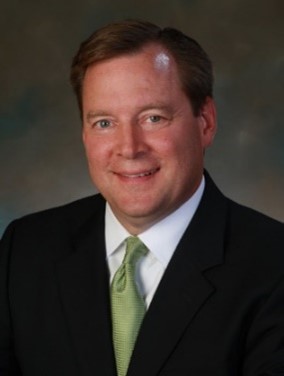 David Falconer is the Head of Funeral & Cemetery Trust for Regions Institutional Services. David works with funeral home and cemetery owners and operators to provide a full spectrum of trust services ranging from investment and legal guidance to administrative and marketing support. He brings to the team more than 34 years of experience in Institutional Trust, the past 15 years with Regions. David earned his Juris Doctorate and is an Accredited Investment Fiduciary (AIF). Want to find an advisor like David? Contact a Wealth Advisor today.
 Article
10 min read
Article
10 min read