
The new face of fraud
The rising threat of AI-powered impersonation
Once upon a time, humans invented the wheel. But in the last 150 years, innovation has accelerated at a pace never seen before: electricity, the automobile, flight and computers have all transformed how we live.
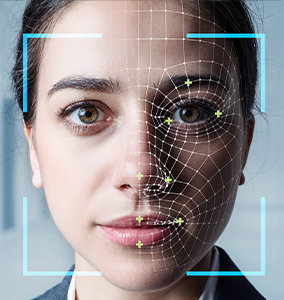
Now artificial intelligence has arrived, offering enormous potential to improve everyday life. But AI also gives criminals new tools to commit fraud by creating deepfakes that can be difficult to distinguish from reality.
“A deepfake uses AI and deep learning to create realistic but fake videos, images or audio — swapping faces or manipulating expressions or speech to make people appear to say or do things they never did,” says Darrell Hawkins, Principal Cyber Engineer at Regions Bank. “That poses risks for disinformation, fraud and exploitation.”
Common deepfake scams
Deepfake AI allows fraudsters to:
- Send fake messages and calls. Scammers can generate AI-driven texts, emails, phone calls and video that looks and sounds like a real person – or a real company, including your bank. They can pull audio from social media or even a brief phone call and use voice cloning to create convincing scams.
- Attempt account takeovers. Criminals can use AI tools to guess passwords, mimic human behavior and attempt to bypass security features.
- Create synthetic identities. Using generative AI, fraudsters blend real and fabricated personal information to access accounts or open new ones. They can also create fake personas to communicate with victims.
- Deliver personalized scams. Catfishing-style tactics can be used to build trust, develop seemingly real relationships and ultimately steal money.
“These threats can be intimidating,” says Prashant Wadkar, Financial Crimes Data and Analytics Manager at Regions. “Our top goal at Regions is to keep you safe, and one of the best ways is by identifying these potential AI scams.”
How to fight back against AI deepfakes
-
Verify every request
Always maintain a “question everything” mindset. Verify unusual or urgent requests — especially those involving money or personal information – through a secondary, trusted communication channel. For example, if someone asks you to provide sensitive information or transfer funds, call your bank directly to confirm the request. At Regions, we call this STOP, CALL and CONFIRM.
-
Learn the detection cues
Deepfake videos and audio often contain subtle inconsistencies.
Audio
- Flat speaking tone: An unnatural or robotic cadence.
- Slurred or unnatural speech: Mispronunciations, awkward pacing or overly smooth speech without natural variation.
- Irregular breathing: Little to no natural breathing or breaths appearing in odd places, including mid-word.
- Inconsistencies over time: Shifts in pitch, tone or quality that suggest audio segments were stitched together.
Video
- Audio-video mismatch: Poor lip-syncing or movements that don’t match the speech.
- Unnatural facial movements: Odd blinking patterns, tics or a lack of blinking altogether.
- Robotic tone: Flat or monotone speech paired with video.
- Unusual lighting or shadows: Inconsistent shadows or lighting around the face.
You aren’t in this alone. Regions leverages advanced technologies to detect deepfakes and support associates in protecting customer assets and personal information. Our teams track emerging trends and use the latest tools to stay ahead of fraud.
“Unfortunately, fraud isn’t going away,” Hawkins notes. “You should have the same vigilance with audio and video as you do with emails. Question everything and verify the source.”
Related Insights
-
 Article
8 min read
Article
8 min read
-
Article
5 min read

-
Article
7 min read

-
Article
9 min read