
The benefits of a donor-advised fund for charitable giving
Discover a flexible approach to philanthropy.
Key takeaways
- A donor-advised fund can help simplify charitable giving while offering flexibility in how and when grants are distributed to eligible nonprofit organizations.
- Contributing assets to a DAF may provide immediate tax benefits and create opportunities for more strategic, long-term philanthropy.
- DAFs can help families build a legacy of giving by involving multiple generations in charitable decision-making.
There is one charitable giving vehicle that has soared in popularity among Americans: the donor-advised fund. The number of DAFs has grown steadily, reaching 3.59 million in the U.S. and contributions exceeding a record $90 billion, according to the DAF Research Collaborative’s report.
Their rapid growth reflects their ability to meet a wide range of charitable and financial planning objectives. “A donor-advised fund is a particularly useful and flexible tool for helping families pursue their goals for stewardship and giving back,” says Steven Sommers, Philanthropic Solutions Area Manager.
What is a donor-advised fund?
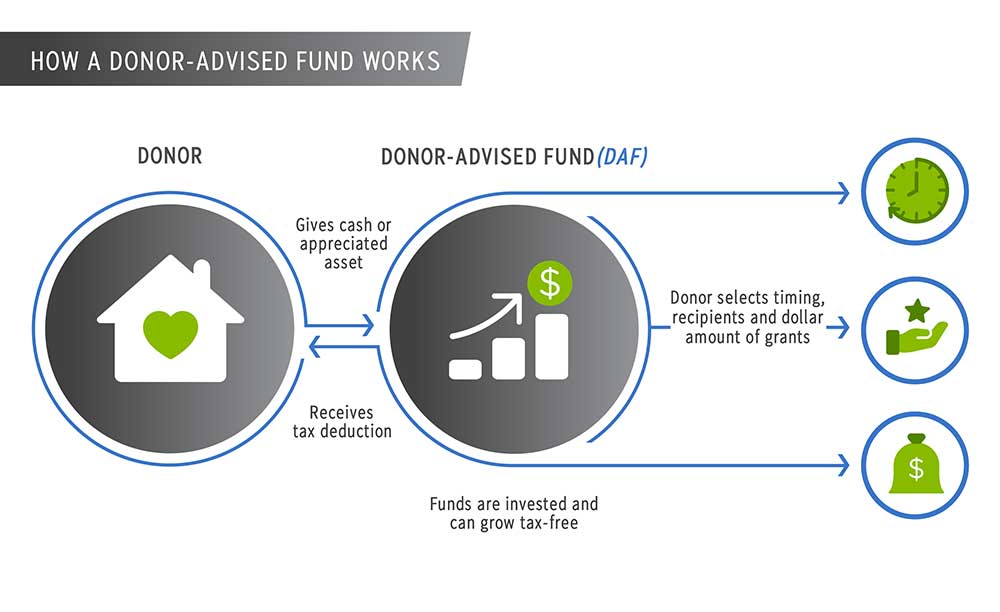
A donor-advised fund is an account for contributing cash, securities or other assets that may qualify for a charitable tax deduction. Assets contributed to a DAF may be invested, allowing charitable resources to potentially grow tax-free before grants are recommended.
For individuals and families looking to make a lasting charitable impact, these accounts offer both convenience and flexibility. Contributions are irrevocable and may qualify for an immediate tax deduction, while donors can thoughtfully recommend grants to charitable organizations over time. By consolidating giving in a single account and outsourcing administrative tasks to the fund sponsor, donors can focus more on their philanthropic goals and less on day-to-day management.
A useful tool for multi-year giving
DAFs are often used in a charitable giving strategy called “bunching,” which means putting several years’ worth of charitable donations into the fund during a single tax year instead of giving a smaller amount every year.
“Bunching is a tax-efficient way of giving,” Sommers says. “You bring multiple years’ worth of charitable gifts into a single year and then recommend grants over time.”
For some taxpayers, combining several years of charitable contributions into a single tax year may increase the likelihood that total itemized deductions exceed the standard deduction threshold, potentially enhancing the tax benefit associated with charitable giving.
For example, if a donor plans to give $10,000 annually for five years, they instead could contribute $50,000 to a DAF in one tax year, potentially maximizing tax benefits while continuing to recommend grants over the next five years.
Selling a business while giving back
When a business owner sells a company, the transaction can create significant tax consequences. Depending on how the company is held, contributing shares of the company to a DAF before the sale may help avoid recognition of capital gains on the contributed shares. It may also help reduce taxable income through an immediate charitable deduction while allowing the donor to set aside funds for future giving.
This approach provides time to develop a thoughtful charitable strategy and identify the organizations and causes they would like to support over time.
Turning appreciated assets into impact
These accounts can also be particularly effective for individuals holding highly appreciated investments. Rather than selling appreciated stock, incurring capital gains taxes and then donating the proceeds, donors may contribute the shares directly to a DAF.
In many cases, contributing appreciated shares directly to a DAF may allow a greater portion of the asset’s value to remain available for investment and charitable purposes, allowing donors to maximize the impact of their giving while simplifying the donation process.
Encouraging family philanthropy
“A donor-advised fund can also serve as a training ground for family stewardship,” Sommers says. DAFs are indeed becoming an increasingly popular way for families to involve younger generations in philanthropy. Their streamlined structure and user-friendly digital tools can make it easier for new donors to identify and support causes that align with their values.
Serving as an advisor for a charitable account can provide valuable hands-on experience in financial and charitable stewardship, helping the next generation develop the skills and perspective needed to take on future leadership responsibilities within a family foundation or other family enterprise. Parents can establish a DAF and involve their children and grandchildren in age-appropriate ways to increase their financial literacy. Families can also work together to review charitable causes and recommend grants, an exercise that makes family values tangible.
This preparation may become even more meaningful as an estimated $124 trillion is projected to transfer between generations by 2048, including approximately $18 trillion directed toward charitable causes.
“The donor-advised fund isn’t just about charitable giving. It’s about teaching future generations the meaning of wealth, generosity and responsibility,” he says.
DAF or private foundation?
DAFs and private foundations each have the potential to play an important role in a family’s charitable strategy. While private foundations offer greater control, visibility and opportunities for family governance, they also involve more administrative responsibilities, regulatory requirements and operating costs. DAFs generally provide a simpler alternative, allowing donors to support charitable causes without the ongoing management responsibilities associated with a foundation.
For some families, the choice is not one or the other. A DAF can complement a private foundation by providing a flexible option for anonymous giving, supporting organizations that fall outside the foundation’s annual grantmaking priorities or involving younger generations in philanthropic decision-making.
Another tool in your toolbox
Today’s donors are taking a more strategic approach to philanthropy, often combining multiple charitable vehicles to align their giving with both personal values and long-term goals. DAFs, private foundations, charitable lead trusts and charitable remainder trusts each offer distinct benefits. When thoughtfully integrated into a broader charitable plan, they can create opportunities for greater impact, increased flexibility and more intentional support for charities over time.
Talk to your Regions Wealth Advisor about:
- Building a plan for achieving your philanthropic goals.
- How our Philanthropic Solutions team can help you enhance the impact of your philanthropy.
Want to get started with wealth planning?
Our wealth management guide can help you identify your top planning priorities.
Interested in talking with an advisor but don’t have one?
Find a wealth advisor in your area.
FAQ
A donor-advised fund is a charitable giving account that allows individuals, families or organizations to contribute assets, potentially receive an immediate tax deduction and recommend grants to qualified charities over time.
Key benefits may include potential tax advantages, simplified charitable administration, flexibility in timing charitable grants, opportunities for tax-free growth of invested assets and support for long-term philanthropic planning.
Yes. Many donor-advised funds accept appreciated securities and other eligible assets. Contributing appreciated assets directly may help maximize the amount available for charitable purposes.
Bunching involves making several years' worth of charitable contributions in a single tax year. Donors can then recommend grants from the donor-advised fund over multiple years while potentially optimizing tax benefits.
A donor-advised fund generally offers a simpler, lower-maintenance approach to charitable giving, while a private foundation may provide greater control and governance opportunities but often comes with increased administrative requirements and costs.
Yes. Many families use donor-advised funds to engage children and grandchildren in charitable discussions, grant recommendations and stewardship decisions, building financial literacy and helping pass philanthropic values from one generation to the next.
Related Insights
-
 Article
11 min read
Article
11 min read

-
Article
11 min read

-
Article
9 min read