
The tax advantage
Proactive tax planning may help support wealth preservation, growth objectives, and efficient wealth transfer strategies.
Key takeaways
- Effective tax planning is a year-round process, not a once-a-year exercise.
- Tax-advantaged accounts may help reduce current taxes while supporting long-term financial goals.
- Current estate and gift tax exemptions may create opportunities to transfer wealth more efficiently.
- Business owners and real estate investors often have access to additional tax planning strategies and deductions.
- Opportunity Zone investments may offer tax benefits but require careful liquidity and tax planning.
- A coordinated approach involving wealth advisors, accountants, and attorneys can help align tax decisions with broader wealth and legacy objectives.
While taxes are a reality of building and preserving wealth, proactive planning may help reduce unnecessary tax exposure and create more opportunities to grow, protect, and transfer assets efficiently. For high-net-worth families, tax planning is not just about minimizing today’s tax bill. It’s an important component of a broader wealth strategy that can support investment goals, business succession, charitable giving, and multigenerational wealth transfers.
“Mitigating taxes is most effective when planning is done year-round, and it’s never too early to start,” says Maya Brill, Senior Wealth Strategist. “Having a long-term strategic tax plan while implementing tactical changes as opportunities present themselves provides greater flexibility to capitalize on tax-saving opportunities, adapt to changing tax laws, and keep your overall wealth and legacy goals on track.”
Tax-advantaged accounts may help offset income taxes
For wealthy individuals, tax planning can get a bit complex. Starting early and focusing on proactive strategies may help minimize your overall tax burden and potentially create opportunities for growth and long-term wealth preservation. From tax advantaged accounts, such as retirement plans, education savings, and health savings accounts, these tax-deferred or tax-free vehicles may help reduce overall annual income taxes, depending on individual circumstances.
For those looking to help fund a college education for children or grandchildren, you may consider super-funding these accounts which can now accelerate five years of annual gift tax exclusions ($95,000 per individual or $190,000 per married couple in 2026) in a single year. Depending on individual circumstances and gift-tax rules, this move may be an option to reduce large sums of money from your taxable estate.
Know the current tax laws — and opportunities
“Recent tax law changes created temporary tax savings opportunities, such as the state and local tax (SALT) cap increase, bonus depreciation extensions, car loan interest deduction, and more,” says Brill. “Taxpayers should consider whether income, deductions, purchases, or gifting strategies can be timed to maximize these opportunities.”
Current law provides for a lifetime federal estate and gift tax exemption of $15 million for individuals and $30 million for married couples filing jointly (indexed for inflation), which makes giving even more impactful as it may significantly reduce current and future taxes. These changes also may have a notable impact on generational wealth transfers.
For affluent households, even modest changes to deductions, exemptions, and tax treatment of investments can create significant planning opportunities when applied across large portfolios, closely held businesses, or family estates.
Brill notes that beyond the tax advantages, the increased exemption allows families to transfer wealth during their lifetime and play an active role in shaping their legacy. “The exemption gives parents and grandparents the opportunity to see the impact of their gifts, while helping the next generation develop the skills, values, and sense of responsibility needed to be effective stewards of family wealth.”
Small business owner tax planning
If you are a small business owner, there are many tax-advantaged opportunities to consider. Intuit TurboTax shares 7 ways for small business owners to save on taxes through deductions, retirement plans, equipment purchases, and health plans. The Internal Revenue Service (IRS) provides a full list of credits and deductions for small business owners, which offers additional credits for businesses in qualified Opportunity Zones.
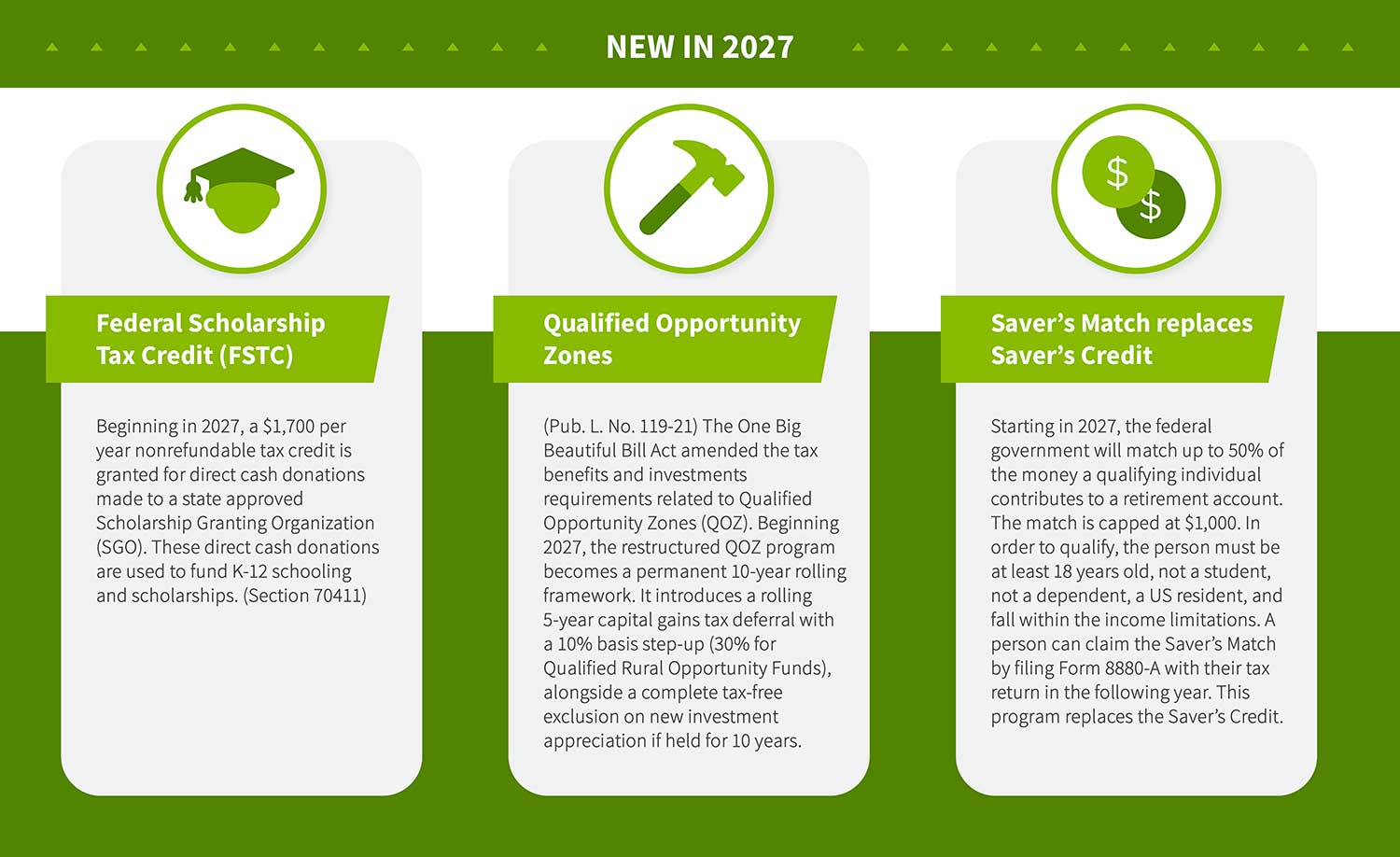
Understanding the restructured Opportunity Zone program
Under recently enacted federal tax legislation, the Qualified Opportunity Zone program is scheduled to transition to a permanent rolling framework beginning in 2027. It introduces a rolling 5-year capital gains tax deferral with a 10% basis step-up (30% for Qualified Rural Opportunity Funds), along with the potential for exclusion of appreciation on a qualifying investment held for at least 10 years, subject to applicable tax laws and program requirements.
“While qualified opportunity zone funds can provide tax deferral, with a small basis step-up, the taxes are due at the latest in 5 years,” notes Brill. “If you are planning on holding the qualified opportunity zone fund, you will need to make sure you have sufficient liquidity available to pay the tax liability.”
Opportunity Zone investments may be particularly relevant for investors who have recently realized substantial capital gains from the sale of a business, real estate asset, or concentrated stock position and are seeking tax-efficient reinvestment opportunities.
Real estate investments and tax planning
Real estate investing may provide meaningful tax benefits. From annual deductions for operating costs and mortgage interest, to non-cash depreciation to offset rental income and capital gains deferral strategies, there are notable ways to potentially reduce your tax burden. This can apply whether you own a vacation home or a portfolio of rental properties.
There are some specific tax laws around rental properties. The IRS offers tips on rental real estate income, deductions, and recordkeeping that specify reporting requirements. There are also clear definitions of when a property is considered a vacation home or a rental property. According to the IRS, you are considered to use a dwelling unit as a residence if you use it for personal purposes during the tax year for a number of days that’s more than the greater of 14 days, or 10% of the total days you rent it to others at a fair rental price.
“Real estate can be an effective component of a diversified investment strategy, offering another source of potential passive income and appreciation, while certain operating expenses and depreciation deductions may provide tax benefits,” shares Brill. It is important to note that most passive investors cannot use real estate losses to offset other sources of income, making real estate’s tax advantages most effective when viewed as part of a broader long-term wealth building strategy.
Depending on circumstances, investors may also explore strategies such as 1031 exchanges, cost segregation studies, or determining whether they qualify for real estate professional status to help maximize potential tax benefits.
Some of these strategies may be subject to market and investment risks that should be considered prior to undertaking. As always, we recommend you consult with a tax professional for a full understanding of your individual tax situation.
Talk with your wealth advisor about
- Whether your current tax strategy is aligned with your long-term wealth and legacy goals
- How charitable giving may fit into your broader wealth strategy.
- Tax-efficient ways to transfer wealth to children or grandchildren.
- Any upcoming tax law changes that could affect your planning strategy.
Want to get started with wealth planning?
Our wealth management guide can help on your journey to generational wealth.
Interested in talking with an advisor but don’t have one?
Find a Wealth Advisor in your area.
Frequently asked questions
Related Insights
-
 Article
14 min read

-
Article
12 min read