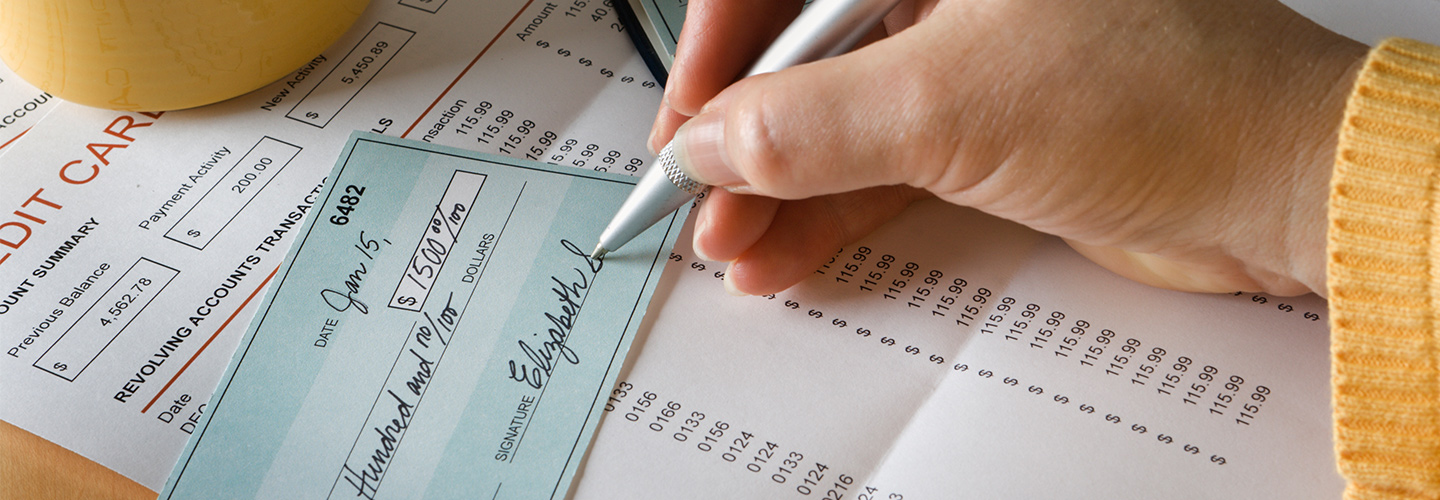
How to write a check
To write a check, fill in the date, payee name, amount in numbers and words, memo if needed, and your signature to authorize payment from your checking account. Completing each field clearly helps ensure the check processes correctly and reduces the risk of errors or fraud.
Even as digital payments continue to grow, checks still play a role in everyday finances. According to Federal Reserve consumer payment research, consumers continue to write billions of checks each year, particularly for rent, contractors, tuition and payments that require clear paper records.
Knowing how to write a check correctly can help protect your money and avoid processing delays, especially when paper checks are required alongside digital tools available through Regions Online Banking.
What information is required to write a check?
Every U.S. personal check includes the same required information, regardless of the financial institution:
- Date written in MM/DD/YYYY format
- Payee name (the person or business you’re paying with the check) written exactly as provided
- Numeric amount entered to two decimal places
- Written dollar amount with cents shown as a fraction over 100
- Signature that matches the bank’s records
- A 9-digit routing number identifying the bank
- An account number, typically 8 to 12 digits long
What each part of a check means
Understanding the purpose of each section of a check can help prevent mistakes and reduce fraud risk.
- Date: Indicates when the check becomes payable and helps prevent misuse.
- Payee line: Specifies who is legally allowed to receive the funds.
- Numeric amount box: Shows the payment amount in dollars and cents.
- Written amount line: Legally controls the payment amount if figures differ.
- Memo line: Optional, but useful for recordkeeping or dispute resolution.
- Signature line: Authorizes the bank to release funds from your account.
How to write a check step by step
Writing a check follows the same basic steps for personal and business checks in the U.S.
- Write the current date. You may write a future date, but banks are not legally required to delay processing postdated checks.
- Write the full legal name of the payee. Avoid writing checks to “cash.”
- Enter the amount in numbers, placing figures close to the dollar sign.
- Write the amount in words, expressing cents as a fraction such as 25/100.
- Add a memo if helpful for your records and to remember what the check was for.
- Sign the check. Unsigned checks are not valid.
How to void a check
If you make a mistake or need to provide payment information for direct deposit or automatic payments, a check can be voided instead of cashed.
To void a check, write “VOID” in large letters across the front of the check, taking care not to obscure the routing or account numbers. A voided check cannot be deposited or cashed.
Common check mistakes to avoid
Even small errors can cause delays or rejected payments. These include:
- Leaving blank space after the written dollar amount
- Using correction fluid or erasing errors
- Trying to deposit checks with dates that show they were written more than 180 days earlier, which Regions Bank and most U.S. financial institutions treat as expired and not valid
- Mismatched numeric and written amounts, where banks generally honor the written amount
- Mailing checks without a secure envelope
When using a check still makes sense
Checks can be useful when a payee does not accept digital payments, when documentation is required, or when payment amounts exceed daily digital transfer limits, which often range from $2,500 to $10,000.
Small businesses may also use checks to pay vendors, contractors, or certain government fees. To reduce reliance on paper checks, many customers manage payments and deposits digitally through Regions checking accounts and features like mobile deposit.
How to help protect yourself when writing checks
Simple habits can reduce fraud risk and help keep your account secure.
- Use blue or black ink, never pencil
- Draw a line through unused space on the written amount line
- Store blank checks in a secure location
- Record check numbers and amounts to help spot unauthorized payments
- Review account activity regularly and report missing checks promptly
- Avoid putting checks in your mailbox and drop them directly at the post office
These tips can help anyone looking to reduce fraud risk and protect their checking account.
Life events where checks often come up
Checks are commonly used during major life events such as moving to a new home, paying tuition, starting a business, or managing an estate. During these moments, a Regions banker can help you choose tools that simplify payments and improve tracking.
More everyday money guidance is available in the Regions Next Step® Financial Education Hub.
Take the next step
Make an appointment with a banker to learn more about how to put your checking account to work for you. They can also help you create a personalized Regions Greenprint® plan to find financial solutions that best meet your goals.
Frequently asked questions about writing checks
Most banks, including Regions Bank, generally will not cash stale-dated checks, or those whose dates show they were written more than 180 days earlier, although policies vary by institution.
Yes. Writing a check to yourself can help move money between accounts or withdraw funds.
If the numeric and written amounts are different, banks generally process the written amount.
Checks typically clear within two to five business days, depending on the bank and deposit method.
The safest way to mail a check is over the counter at a U.S Post Office. Avoid putting checks in your mailbox to reduce the risk of theft and fraud.
Yes. Checks remain a legally recognized payment method in the United States.
Related Insights
-
 Article
6 min read
Article
6 min read

-
Article
11 min read

-
Article
10 min read